|
|
It's me again - with another piece of personal history that made its way into the Mountain Women Series -
Telephones.
Most of us can’t imagine life without a telephone. We depend on the convenience of reaching family or taking care of business immediately, and it’s upsetting when we can’t.
|
A few generations ago, communicating was different.
|
In The Girl on the Mountain, the year is 1899. The sawmill town of Winkler gets its mail by train, and the railroad uses the telegraph to coordinate train movements. Telephone systems already serve cities, but Winkler is small, remote, and company-owned. It has no telephones.
|
Later in the series, when Winkler becomes a coal town, the engineer who owns the mine builds a local telephone system.
|
The true story that inspired that detail:
|
I’m sure I’d never have thought to give Winkler its own telephone system if I hadn’t lived about a mile from the site of one. The story of Dr. Myers and his telephone system was part of local lore, so I could easily imagine how telephones might come to Winkler. A character would have to build one.
|
In the early 1900s, Dr. J. W. Myers, a physician in Nestorville, West Virginia, needed a better way to communicate as his practice grew. He began by running a telephone line from his house to the homes of his father and brother-in-law. Nestorville had perhaps fifty households, but its post office, general store, doctor, church, and school served a larger rural area.
|
|
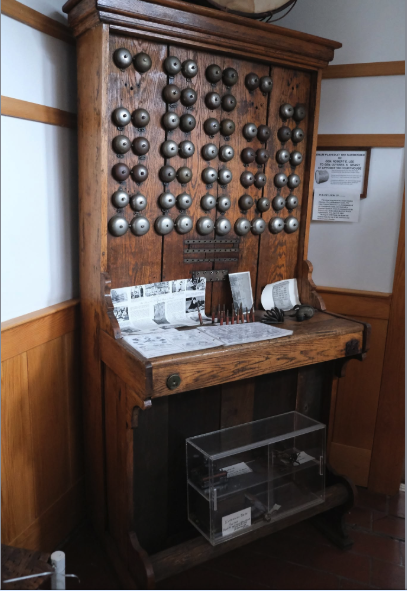
Dr. Myers built the first Nestorville switchboard himself and later built three more as the system expanded. His wife, Lennie, was the first switchboard operator. One of the Myers switchboards, seen below, is displayed at the Barbour County Historical Museum.
|
|
|
In stories of the Mountain Women Series, almost everyone in Winkler shares a “party line,” so anyone on the line can pick up the receiver and hear someone else’s conversation. I grew up in Ohio, not West Virginia, but the irritations I wrote into those stories came from memories of family complaining about people “hogging the line” or “listening in.”
|
Dr. Myers's telephone system grew into the Citizens United Telephone Company, which eventually served about 1,700 subscribers. To locals, he is mainly remembered as the founder of a dynasty of physicians who helped establish two hospitals in the county.
|
As is true of so much of rural America, the ingenuity and cooperative spirit of individuals made their communities better. I’m glad I could share a little of that history in my stories.
|
|
A Mountain Story for Christmas
|
With Christmas approaching, perhaps someone on your list would enjoy a visit to Winkler. The Girl on the Mountain is where the Mountain Women Series begins, back when there were no good roads and the mail came by train. There was plenty of communication “over laundry lines,” but no telephones in Winkler.
|
|
I hope you’ll consider this book for a gift or for your own winter reading. If you’re buying it for Christmas, please order soon to allow time for delivery.
|
|

|
|
Wishing you a holiday season filled with love and remembrance!
|
|
|
|
|
|
Thanks for reading!
|

|
|
You received this email because you signed up to my newsletter. Feel free to contact me at www.carolervin.com
|
|
|
|
|
|
|
|
|
Thanks for reading, and thanks for your ratings and reviews!
|
|

|

|
|
|
|
|
|